

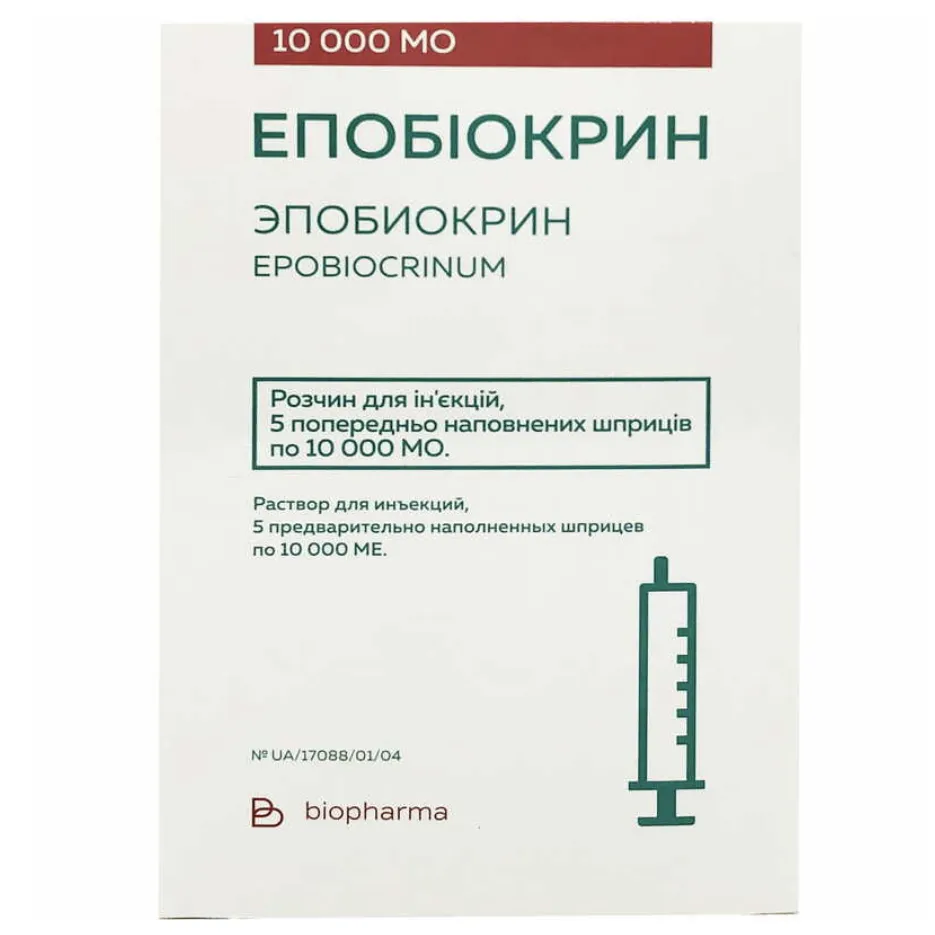
Description
Epobiocrin 10000 IU – High-Potency Epoetin Alfa
Injection for Severe Anemia and ESA Responders
What is Epobiocrin 10000 IU?
Epobiocrin 10000 IU is a high-dose recombinant human erythropoietin (epoetin alfa) formulation used in the treatment of severe or refractory anemia, especially in patients with chronic kidney disease (CKD), cancer-related anemia, chemotherapy-induced anemia, or anemia in HIV therapy. Each sterile pre‑filled syringe is calibrated to contain 10,000 international units (IU) of epoetin alfa and is designed for injection either subcutaneously or intravenously under strict medical supervision.
Why Choose Epobiocrin 10000 IU?
- High efficacy in severe anemia: Ideal when lower doses fail to raise hemoglobin.
- Reduced injection volume: One syringe often covers multiple weekly doses for patients above 80 kg.
- Convenient for outpatient or home therapy: Fewer syringes and injections.
- Essential for ESA hyporesponders: Used when patients show minimal response to 2000–5000 IU.
Key Benefits and Applications
Epobiocrin 10000 IU addresses anemia related to:
- Chronic kidney disease, including hemodialysis and peritoneal dialysis patients
- Chemotherapy-induced anemia in oncology patients
- HIV-associated anemia, especially in zidovudine-treated patients
- Preoperative anemia to reduce transfusion needs
- Patients with ESA hypo-responsiveness needing higher dosage
Composition and Product Packaging
Each 0.5 mL Epobiocrin syringe contains:
- Active Ingredient: Epoetin alfa – 10000 IU (recombinant human erythropoietin)
- Inactive Ingredients: Sodium chloride, polysorbate 20, thermostabilizers, water for injection
The solution is clear and colorless, supplied in a single-use sterile syringe to ensure safe, accurate dosing.
Mechanism of Action
Epoetin alfa mimics the physiologic effects of erythropoietin produced by kidneys. By binding to erythropoiesis-stimulating receptors on immature red blood cell precursors in bone marrow, it activates intracellular pathways that lead to proliferation, differentiation, and maturation of erythroid cells. This results in increased red blood cell mass, improved oxygen delivery, reduced fatigue, and better overall functional capacity.
Indications for 10000 IU Dose
Severe or Symptomatic Anemia in CKD
For hemoglobin < 8 g/dL in dialysis or nondialysis patients, a 10000 IU dose is often used to achieve faster control of anemia and reduce transfusion dependence.
Chemotherapy-Induced Severe Anemia
In oncology patients with severe anemia and limited response to conventional lower doses, 10000 IU enables more efficient correction while reducing injection frequency.
ESA Hyporesponse or Resistance
Patients who fail to respond to 2000–4000 IU may require a dose escalation to 10000 IU under supervision.
Dosage and Administration Guidelines
Starting Dose
- Usually 10000 IU once weekly, injected subcutaneously
- For rapid correction, initial dose may be split into 5000 IU twice per week
Dose Monitoring
- Monitor hemoglobin levels every 1–2 weeks initially
- Target hemoglobin is 10–12 g/dL; reduce or pause dose if > 12 g/dL
- Adjust dose by ±25% based on response
Maintenance Therapy
Once target hemoglobin is reached, dosing frequency may decrease to 10000 IU biweekly or adjust to lower frequency based on weight and response.
Pharmacokinetics and Pharmacodynamics
Following subcutaneous injection, epoetin alfa absorption gradually occurs, with peak plasma levels at 12–18 hours. Elimination half‑life is ~24 hours. Intravenous bioavailability is higher but associated with shorter half‑life (~8 hours) and requires more frequent injections.
Side Effect Profile
Common Side Effects
- Elevated blood pressure – occurs in 15–30%
- Injection site reactions: mild pain, erythema
- Flu-like symptoms: fatigue, arthralgia
Serious Risks
- Thromboembolic events (DVT, PE, stroke), especially at high Hb levels
- Pure red cell aplasia (rare antibody-mediated PRCA)
- Severe hypertension requiring dose reduction
Contraindications and Safety Precautions
- Known hypersensitivity to epoetin alfa or any component
- Uncontrolled hypertension must be stabilized before using
- History of PRCA or thrombotic events
- Pregnancy and breastfeeding only if benefit outweighs risks
Key Clinical Trials Supporting 10000 IU Use
Multiple Phase III trials in dialysis and oncology patients have shown that once-weekly high-dose epoetin alfa (including 10000 IU) effectively increases hemoglobin by an average of 2–3 g/dL within 4–6 weeks. These doses were generally well tolerated; hypertension was the most notable adverse event.

Reviews
There are no reviews yet.