

Description
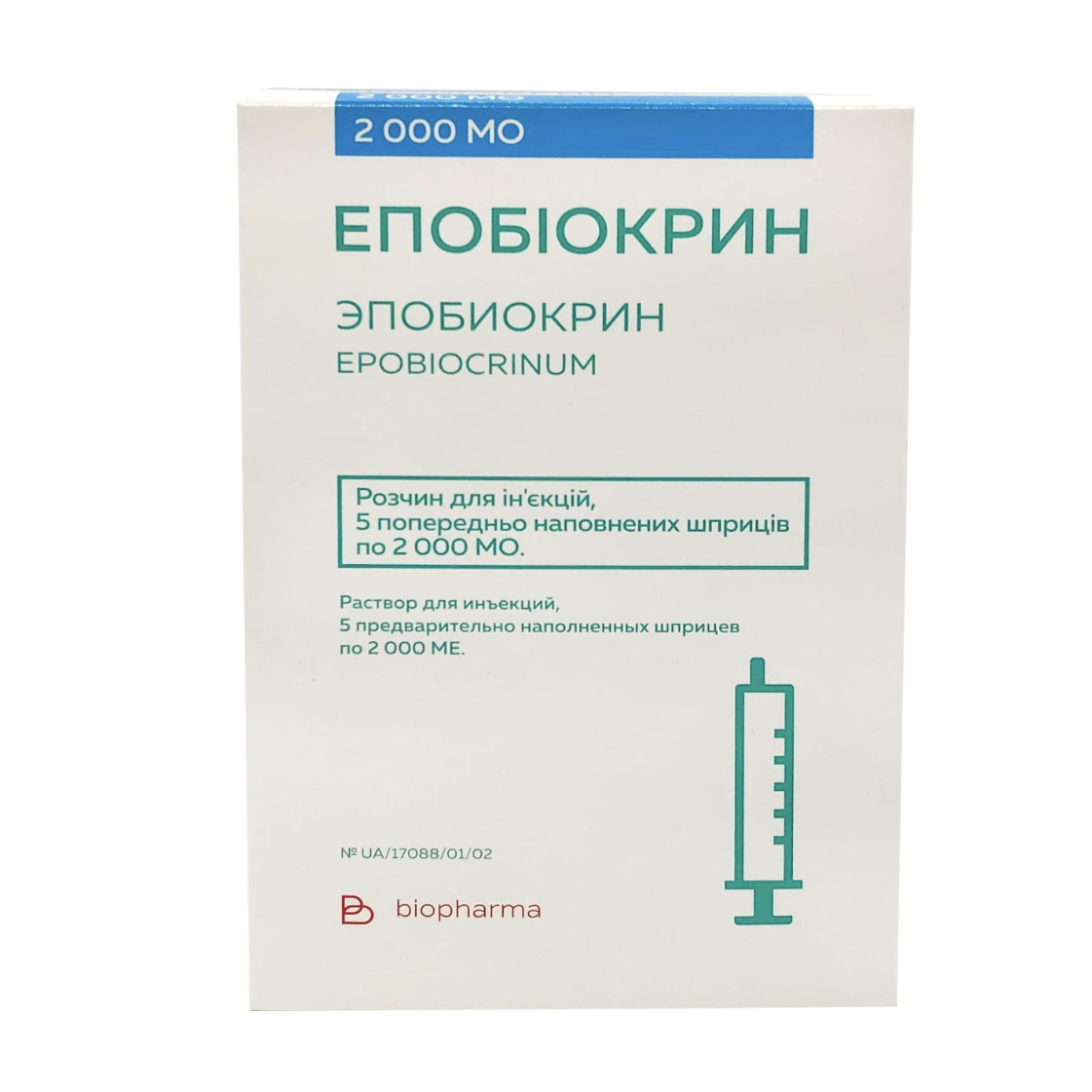
EPOBIOCRIN 2000 IU (Epoetin alfa injection for anemia)
What is Epobiocrin 2000 IU?
EPOBIOCRIN 2000 IU is a therapeutic preparation of recombinant human erythropoietin (epoetin alfa) designed to treat various types of anemia—especially anemia due to chronic kidney disease (CKD), chemotherapy-induced anemia, or anemia associated with HIV infection. Each pre-filled syringe contains 2000 international units (IU) of epoetin alfa in a sterile solution, intended for subcutaneous or intravenous administration under medical supervision.
Why Use Epoetin Alfa 2000 IU?
- Effective in CKD-related anemia: helps stabilize hemoglobin and reduce transfusion dependency in dialysis patients.
- Cancer therapy support: helps oncology patients maintain acceptable hemoglobin during chemotherapy.
- Improves energy and stamina: often restores vitality, reduces fatigue and improves quality of life.
- Preoperative anemia management: used before major surgeries to minimize blood transfusion needs.
- Supports HIV patients: especially useful with zidovudine-induced anemia.
Composition and Presentation
Each 1 mL pre-filled syringe of Epobiocrin contains:
- Active Ingredient: Epoetin alfa — 2000 IU (recombinant human erythropoietin)
- Inactive Ingredients: Sodium chloride, sodium phosphate monobasic, sodium phosphate dibasic, polysorbate 20, and water for injection.
The solution is clear, colorless, and free from visible particles. It is supplied in individual sterile syringes to ensure aseptic administration.
Mechanism of Action
Epoetin alfa acts by binding to erythropoietin receptors on erythroid progenitor cells in the bone marrow. This binding triggers intracellular signaling that promotes proliferation and differentiation of erythroid precursor cells into mature red blood cells (RBCs). The increase in RBC count improves oxygen delivery to tissues, alleviates symptoms of anemia such as fatigue, weakness, and dyspnea, and supports overall physical performance.
Clinical Applications of 2000 IU Dose
The 2000 IU vial or syringe dosage is typically used as a maintenance or starting dose in moderate anemia. When administered subcutaneously or intravenously, doses vary depending on body weight, baseline hemoglobin, and clinical response. It is favored for outpatient and home-use settings due to its convenient dosing and reduced injection volume.
Chronic Kidney Disease (CKD)
Patients with CKD, especially those not on dialysis, often develop anemia due to reduced endogenous erythropoietin production. Epobiocrin 2000 IU is often prescribed to:
- Elevate hemoglobin levels to target range (10–12 g/dL).
- Manage anemia symptoms such as fatigue and cognitive impairment.
- Reduce need for red blood cell transfusions.
Dosing typically starts at approximately 50–100 IU/kg three times weekly until hemoglobin response is observed, followed by dose adjustments to maintain stability.
Cancer‑and Chemotherapy‑Induced Anemia
Many oncology patients experience anemia as a side effect of chemotherapy. Epobiocrin can be used to:
- Reduce transfusion requirements.
- Maintain hemoglobin at safe and tolerable levels.
- Improve patient endurance and ability to complete chemotherapy cycles.
HIV‑Associated Anemia
Patients on zidovudine (AZT) therapy often develop anemia. Epobiocrin helps:
- Counteract zidovudine-induced bone marrow suppression.
- Maintain hemoglobin and reduce risk of dose reductions or treatment interruptions.
Dosage Recommendations
Epoetin alfa dosing requires careful adjustment and monitoring:
Initial Dosage
- Typically 50‑100 IU/kg body weight, administered subcutaneously or intravenously three times per week.
- For a 70 kg adult, this equals approximately 140,000 IU per week, often divided into doses.
Monitoring and Dose Adjustment
- Target hemoglobin: 10–12 g/dL. Exceeding 12 g/dL may increase risk of cardiovascular events.
- Adjust dosage in increments of 25% based on hemoglobin response every 2–4 weeks.
- Maintain dose if hemoglobin rises by 1–2 g/dL over four weeks. Decrease dose if hemoglobin rises too quickly.
Maintenance Therapy
- Once stable hemoglobin is achieved, switch to maintenance dosing (e.g., 25–50 IU/kg once or twice weekly).
- Continue regular hemoglobin monitoring (every 4‑6 weeks).
- Ensure adequate iron stores—supplement iron if ferritin <100 ng/mL or transferrin saturation <20%.
Pharmacokinetics
Epoetin alfa has characteristic kinetics depending on route of administration:
- Half-life: Approximately 4–6 hours after intravenous injection; about 24 hours after subcutaneous administration.
- Bioavailability: ~20% after subcutaneous injection compared to intravenous route.
- No cumulative accumulation: Serum concentrations remain stable with repeated dosing.
Side Effects and Safety Profile
Common Adverse Events
- Hypertension (especially in patients with pre-existing blood pressure issues).
- Headache and dizziness.
- Flu‑like symptoms (fever, chills, myalgia).
- Injection site reactions (erythema, pain).
Rare but Serious Risks
- Thromboembolic events (deep vein thrombosis, pulmonary embolism, stroke).
- Pure red cell aplasia (PRCA) in rare cases of anti‑epoetin antibody formation.
- Excessive hemoglobin rise may increase cardiovascular mortality.
Management & Monitoring
- Regular monitoring of hemoglobin levels every 2–4 weeks during dose adjustments.
- Monitor blood pressure and adjust antihypertensive therapy if needed.
- Iron status markers (ferritin, transferrin saturation) should be checked periodically.
Contraindications & Precautions
- Hypersensitivity to epoetin alfa or any excipient.
- Uncontrolled hypertension (blood pressure should be stabilized before starting therapy).
- Patients with active malignancy should be carefully evaluated, as zidovudine may influence response.
- Pregnant or breastfeeding women—use only if benefits outweigh risks and under medical supervision.
Special Patient Populations
Elderly Patients
Use caution in older adults, especially those with cardiovascular comorbidities; dose and hemoglobin targets should be conservative.
Children & Adolescents
Dosing is weight-based; pediatric data are limited, so therapy should be individualized and supervised by a pediatric hematologist.
Clinical Trial Evidence
Multiple clinical studies demonstrate that epoetin alfa (2000 IU dosage range) effectively improves hematologic parameters in CKD and chemotherapy-induced anemia. In randomized trials, patients receiving EPO demonstrated: reduced transfusion needs, improved fatigue scores, and better exercise tolerance, compared to controls. Safety signals included mild hypertension and rare thromboembolic events.
How to Administer Epobiocrin 2000 IU
- Allow syringe to reach room temperature before injection.
- Wipe injection site (abdomen or thigh) with alcohol swab; rotate sites.
- Inject slowly; discard syringe after single use.
- Store unused syringes refrigerated (+2–8 °C), do not freeze.
Self‑Administration Tips
- Follow healthcare provider instructions exactly.
- Use proper disposal containers for sharps.
- Keep track of injection dates to avoid missed or duplicate doses.
Drug Interactions
No direct drug interactions are known; however:
- Concurrent use of iron supplements may be required to optimize response.
- Anti-hypertensive therapy may be needed to manage elevated blood pressure.
- Caution with pro-coagulant drugs due to thromboembolic risk.
Storage and Handling
- Store refrigerated between +2 °C and +8 °C.
- Do not freeze or shake the syringe.
- Protect from light.
- Discard unused portion after puncture; do not reuse syringe.
Frequently Asked Questions (FAQ)
Can Epobiocrin be taken orally?
No, it must be injected subcutaneously or intravenously. The protein would be degraded in the digestive tract.
How soon will I see results?
Hemoglobin typically increases within 2–6 weeks of starting therapy, depending on baseline conditions and iron status.
Is blood pressure monitoring necessary?
Yes. Elevated blood pressure is a common side effect and should be managed appropriately.
Availability and Legal Status
Epobiocrin is a prescription-only medication, approved in many countries including European Union nations, UAE, India, and other regions. Availability and brand name may differ locally; purchasing should be done through licensed pharmacies or medical providers.
Summary
EPOBIOCRIN 2000 IU (epoetin alfa) is a critically important biologic for treating anemia due to CKD, chemotherapy, HIV infection, or surgical preparation. Its precise dosing (2000 IU), predictable pharmacokinetics, and documented clinical efficacy make it a mainstay in anemia management. Safe use requires medical oversight, regular hemoglobin monitoring, and appropriate iron supplementation.
If you’d like a PDF or styled web block version of this description, or additional sections (e.g. cost comparisons, patient testimonials, regulatory approvals), just let me know.


Reviews
There are no reviews yet.