

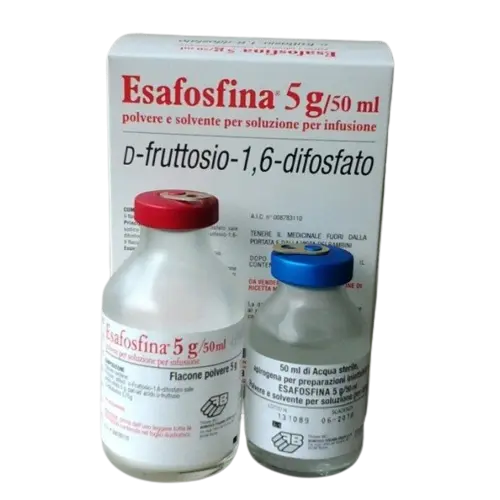
Description
Esafosfina 5 g/50 ml Solution
Composition
Each 50 ml vial contains 5 g of Sodium Phosphate Monobasic as the active ingredient. Inactive components include water for injection and sodium hydroxide (used for pH adjustment).
Description
Esafosfina is a sterile, clear, and colorless intravenous solution designed to restore phosphate levels in patients with clinical hypophosphatemia. It is produced under stringent aseptic conditions and used in hospitals and clinical settings under medical supervision.
Indications
Esafosfina is indicated for:
- Treatment of moderate to severe hypophosphatemia
- Management of phosphate depletion due to diabetic ketoacidosis, alcohol withdrawal, refeeding syndrome
- Supplementation during total parenteral nutrition (TPN)
- Support in conditions of increased phosphate demand: pregnancy, lactation, rapid growth in pediatrics
Administration and Dosage
- Route: Intravenous (slow infusion)
- Dosage: Individualized based on age, weight, renal function, and serum phosphate levels
- Recommended infusion rate: Administer slowly to prevent complications
- Monitoring: Serum phosphate, calcium, potassium, and renal function must be assessed before and during treatment
Contraindications
- Hyperphosphatemia
- Severe renal impairment
- Addison’s disease
- Severe liver dysfunction
- Hypersensitivity to phosphate salts or any excipients
Precautions
- Risk of calcium-phosphate precipitation with rapid correction
- Caution in patients with cardiac disease, renal impairment, or electrolyte imbalances
- Not recommended for use in pediatric patients without strict monitoring
- Do not use with other phosphate-containing products simultaneously
Interactions
- May interact with digoxin, leading to altered cardiac effects
- Concurrent use with antacids containing calcium, aluminum, or magnesium may reduce phosphate absorption or increase toxicity risk
- Caution with potassium-sparing diuretics and vitamin D analogs
Side Effects
- Electrolyte imbalances: hypocalcemia, hyperphosphatemia, hyperkalemia
- Cardiovascular: hypotension, tachycardia
- Gastrointestinal: nausea, vomiting, abdominal cramps, diarrhea
- Injection site reactions: redness, pain, swelling
- Rare: Soft tissue calcification due to calcium-phosphate precipitation
Overdose
Symptoms of overdose include signs of hyperphosphatemia such as muscle cramps, tetany, arrhythmias, and possible renal damage. Treatment involves discontinuation, fluid management, and correction of electrolyte imbalance under medical supervision.
Storage
- Store at 15–25°C (59–77°F)
- Protect from light and moisture
- Do not freeze
- Keep out of reach of children and pets


Reviews
There are no reviews yet.